

The annual LAD 26 conference was in Paris again this year, hosted by CEA between 30 September and 1 October, as well as a Developer Summit the day before on 29 September. The Lustre Collective was a sponsor of the event, and six of the talks across the two days came from our team, with talks covering several new developments in areas such as LDISKFS, new extensions to Linux mdraid, Lustre CSI approaches for working with Kubernetes, and a new modular, fast scanning framework, the Lustre Find Utility.
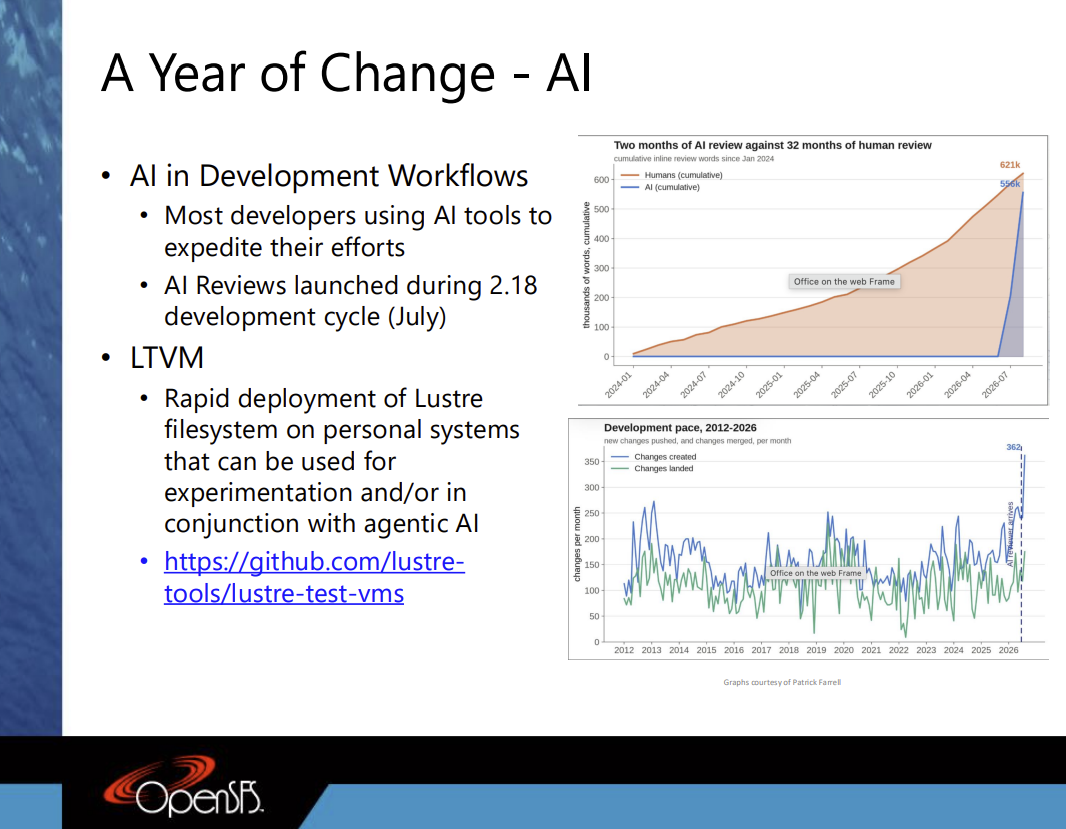
Lustre Community Update Peter Jones
Peter opened the workshop with his regular update on recent developments in the Lustre community. He touched on new trends such as the increasing use of AI tooling in developing and testing Lustre, as well as the outlook for Lustre 2.18, due at the end of the year as the next long-term support branch.
Slides →
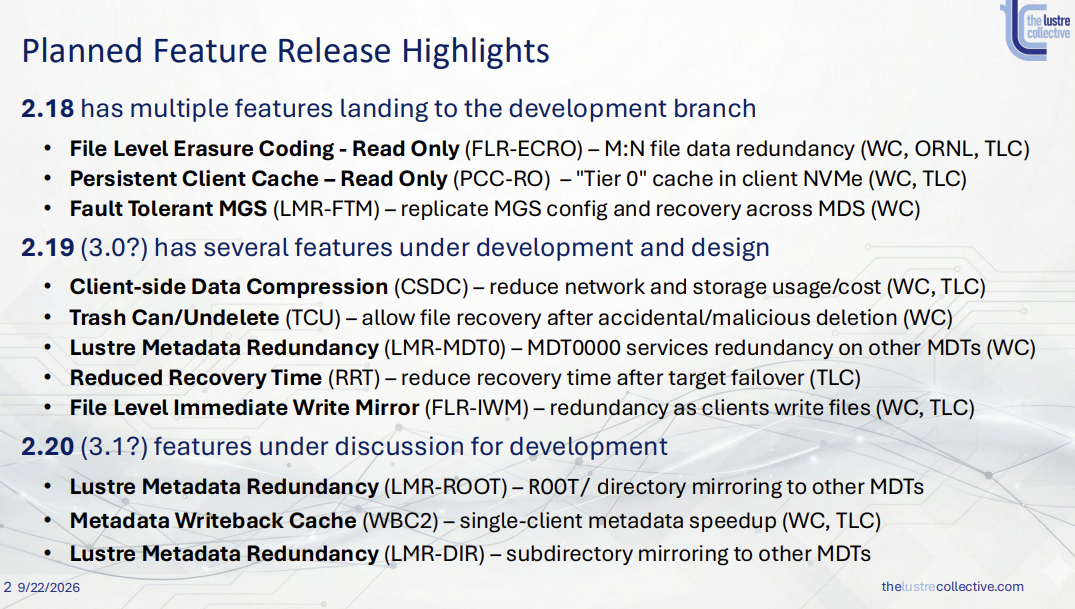
Lustre 2.18 and Beyond Andreas Dilger
Andreas gave an update on the Lustre roadmap and development pipeline with a look ahead to what is planned for future releases.
Lustre 2.18 brings read-only erasure coding, a persistent read-only client cache, a fault-tolerant MGS.
Slides →
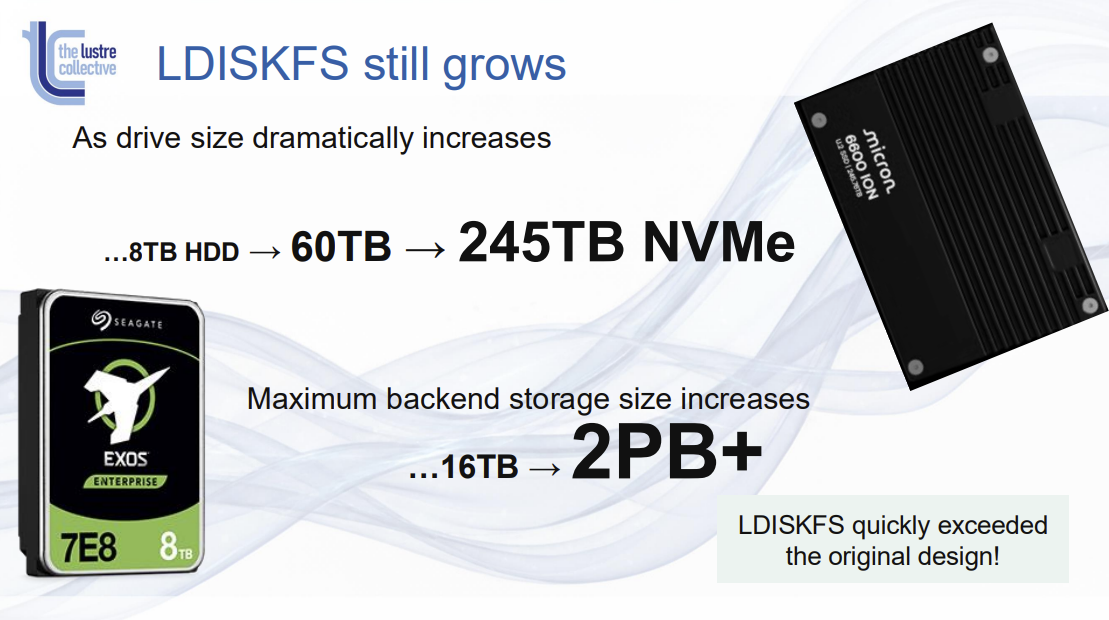
How LDISKFS Makes EXT4 Better
(and Vice Versa)
Artem Blagodarenko
Artem traced twenty years of traffic between ldiskfs and ext4. Extents, the multi-block allocator, delayed allocation, large directories, project quotas and parallel e2fsck all began as Lustre's needs and ended up in the mainline file system that billions of installations run.
Slides →
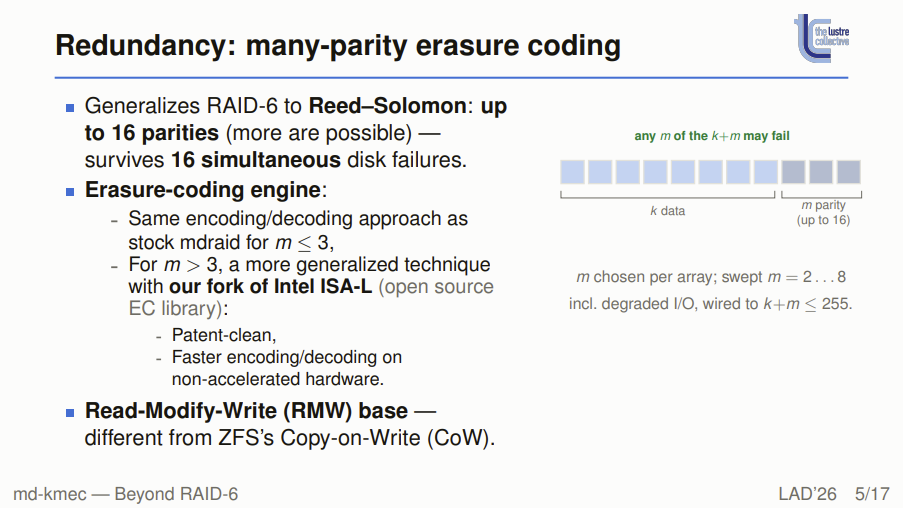
Beyond RAID-6: md-kmec, Many-Parity Software RAID for Lustre OSTs Hiroshi Nishida and Artem Blagodarenko
Hiroshi's work enhances Linux software RAID to support many-parity erasure coding, per-block checksums that heal themselves, and declustered rebuild that spreads the work across the pool. All the work is open-source and being submitted upstream, so that all md-raid users will benefit.
Slides →
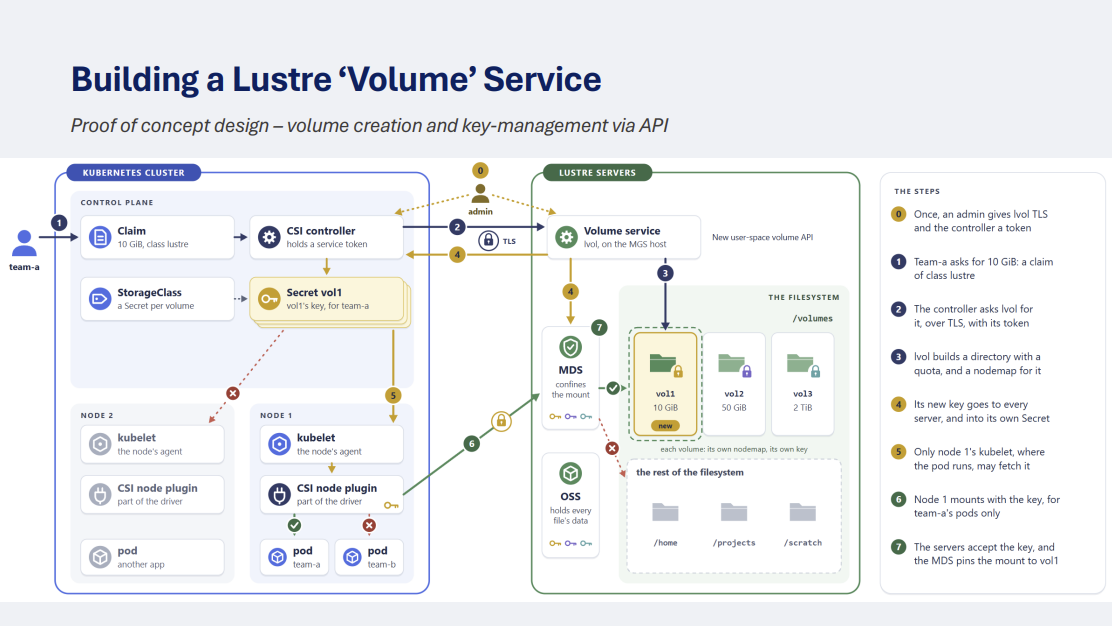
CSI Approaches for Lustre on Kubernetes
Matt Raso-Barnett
Matt reviewed how today's CSI drivers present Lustre to Kubernetes, where the directory-per-volume approach falls short on containment, authentication and identity, and how the nodemap, key-based authentication and aggregate quota primitives arriving in Lustre 2.18 could compose into a proper Lustre volume.
Slides →
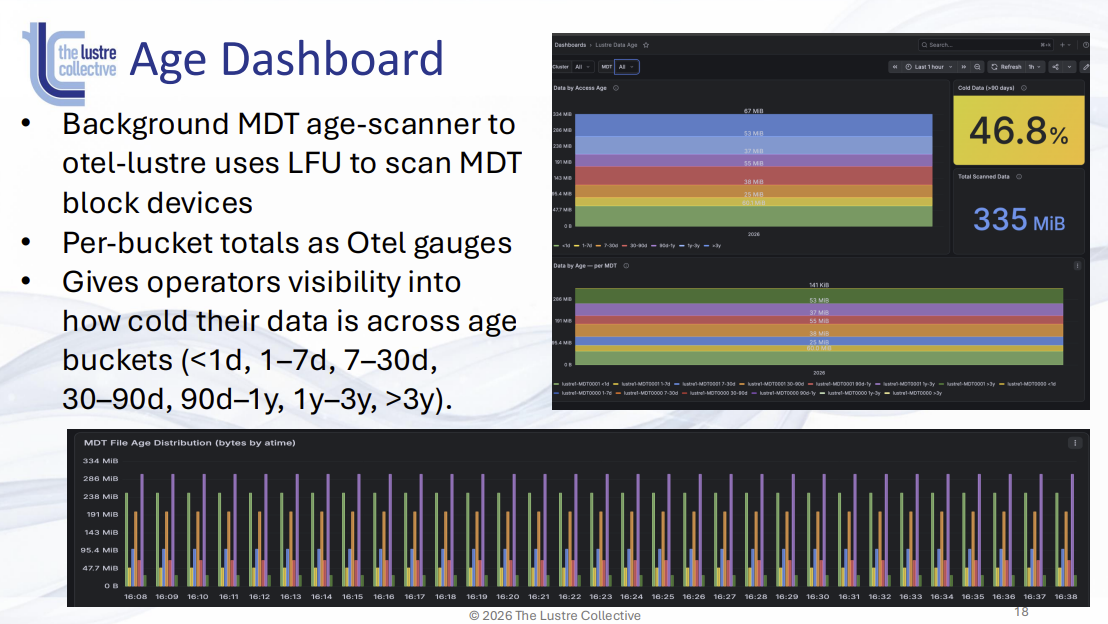
Lustre Find Utility Artem Blagodarenko
Artem and Hiroshi's Lustre Find Utility is a modular, open-source scanning framework built into the Lustre tree: fast scanners that read MDT and OST metadata straight from the device, pluggable filters, and outputs that feed everything from lfs find to tiering, mirror resync and dashboards.
Our thanks to CEA and EOFS for a well-run workshop. The full programme and the slides for every talk are on the EOFS site