

Members of the TLC team presented at the Lustre User Group in Indianapolis on 28 and 29 April, hosted by OpenSFS at Indiana University, with Developer Day following on the 30th. Five of the talks over the two days came from our team, covering a roundup of community activities in the past year, what is coming in Lustre 2.18, data resilience, network observability and multi-tenancy. A short account of each is below, with the slides and the recording.
Lustre Community Update Peter Jones
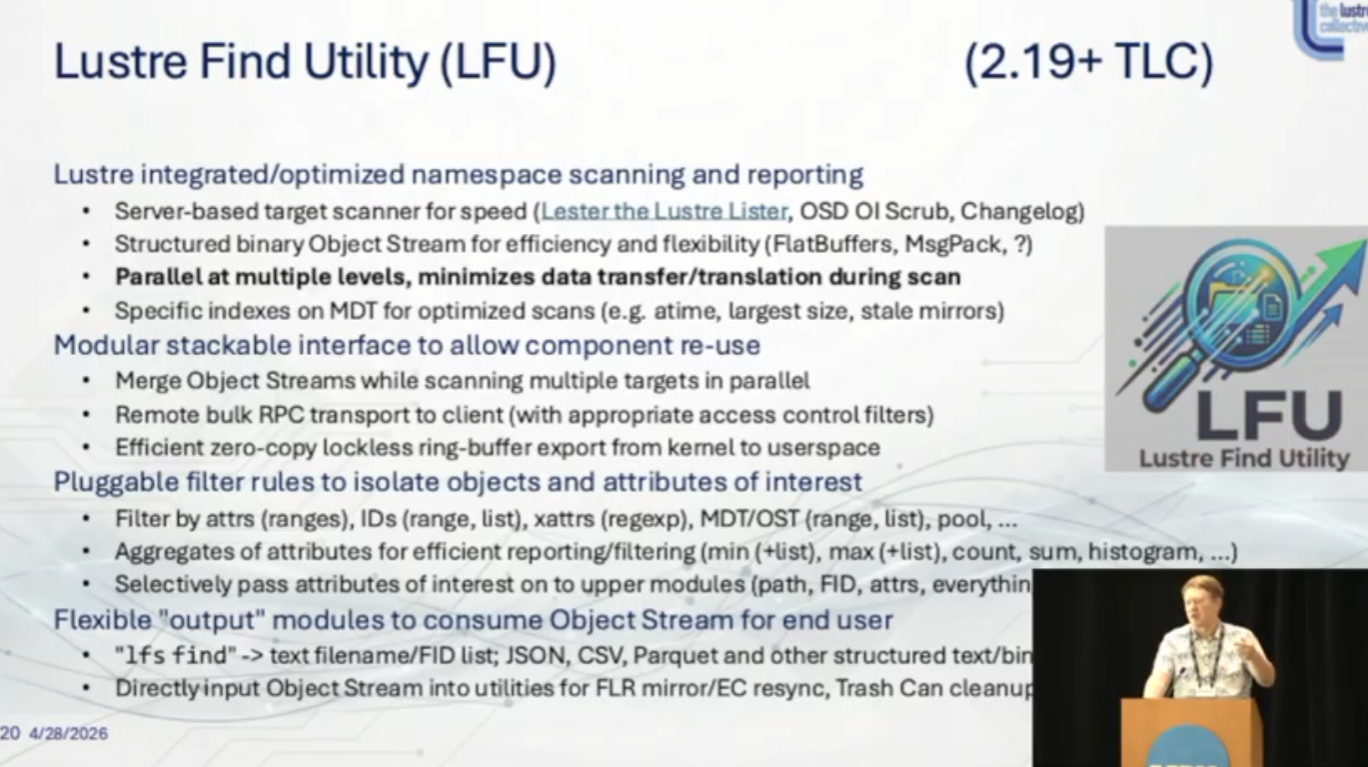
Lustre 2.18 and Beyond Andreas Dilger
Andreas gave a broad overview of the Lustre roadmap, providing a comprehensive cross-section of recent Lustre developments and a look ahead to what is planned for future releases.
Lustre 2.18 brings read-only erasure coding, a persistent read-only client cache, client-side data compression, a fault-tolerant MGS and a trash can with undelete. Beyond 2.18 he looked at metadata redundancy, faster recovery after failover and the API-driven management work The Lustre Collective is leading.
Slides → Video →
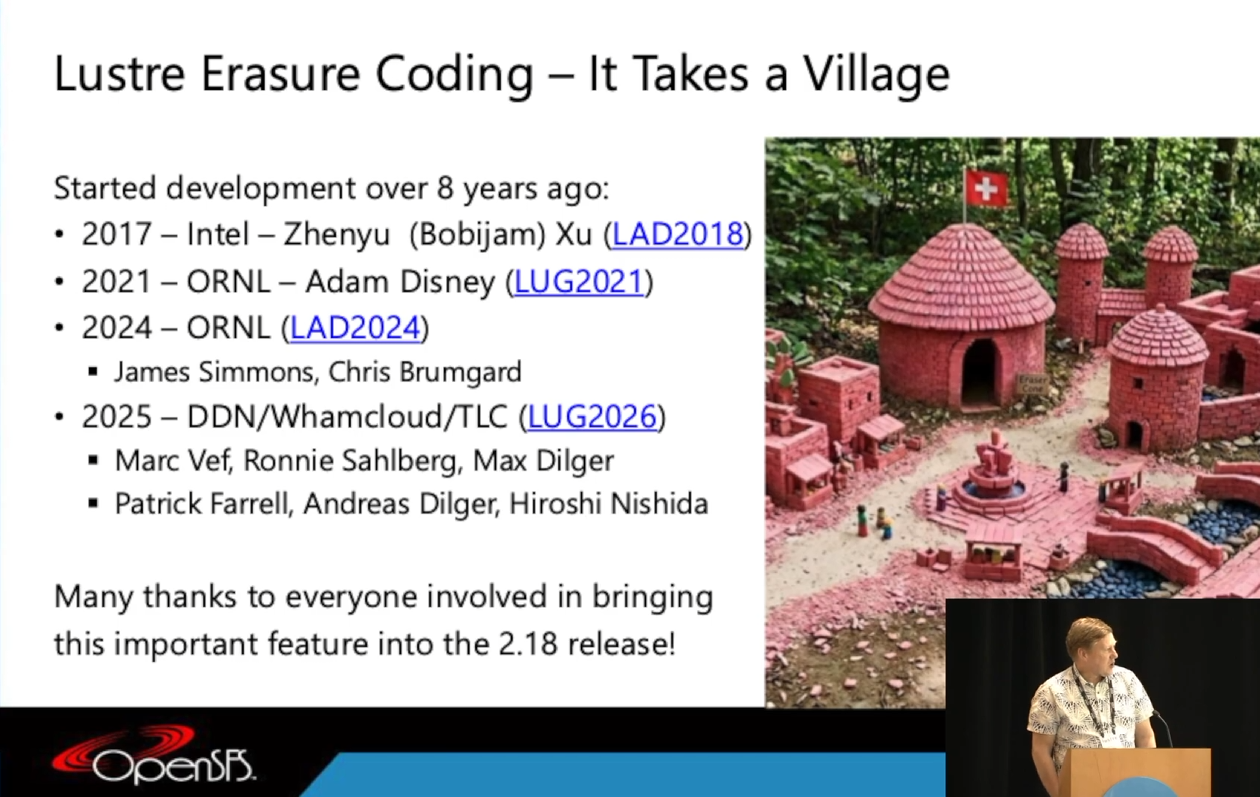
Lustre Erasure Coding Patrick Farrell
Patrick told the story of erasure coding in Lustre, a feature many years in the making across several organisations and now code-complete for 2.18. Read-only erasure coding protects data after it has been written at a fraction of the cost of mirroring, and he set out the two phases that follow, which extend that protection to files while they are being written.
Slides → Video →
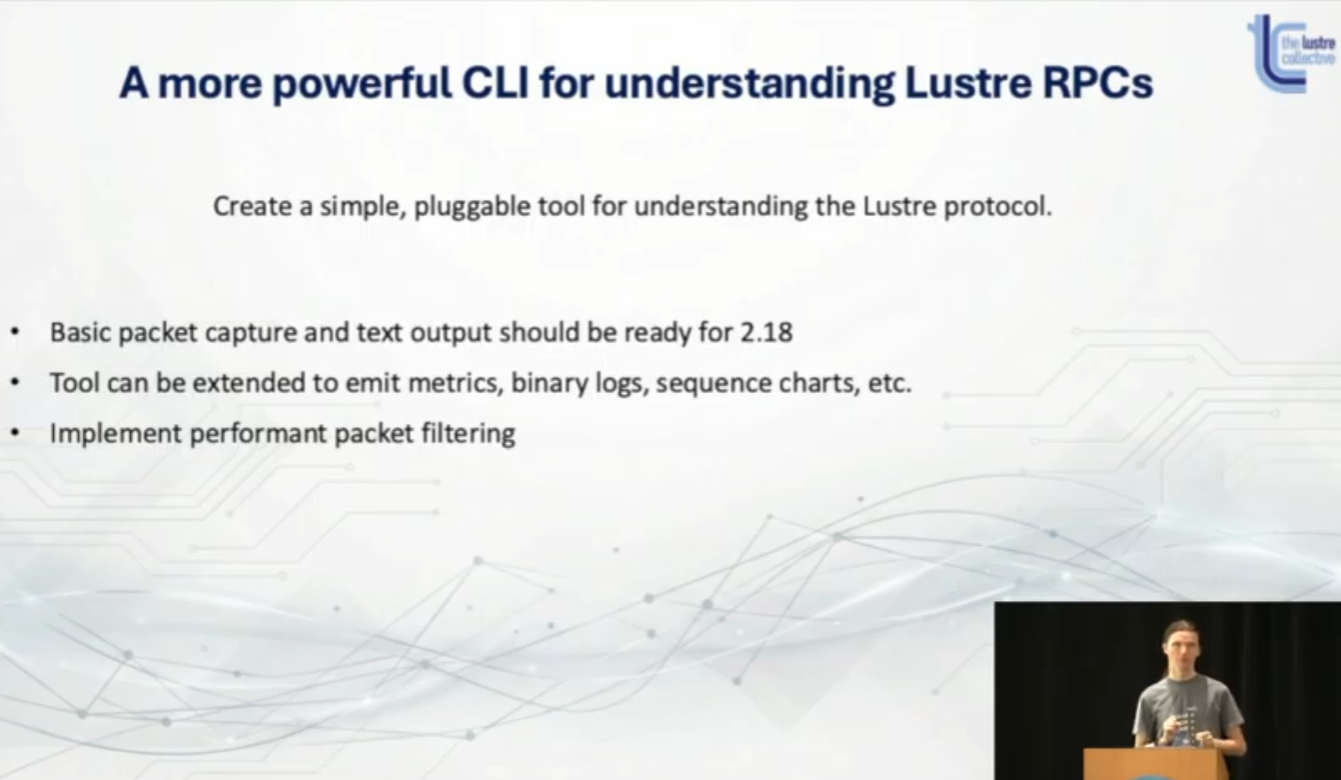
LNet Observability via Packet Tracing Tim Day
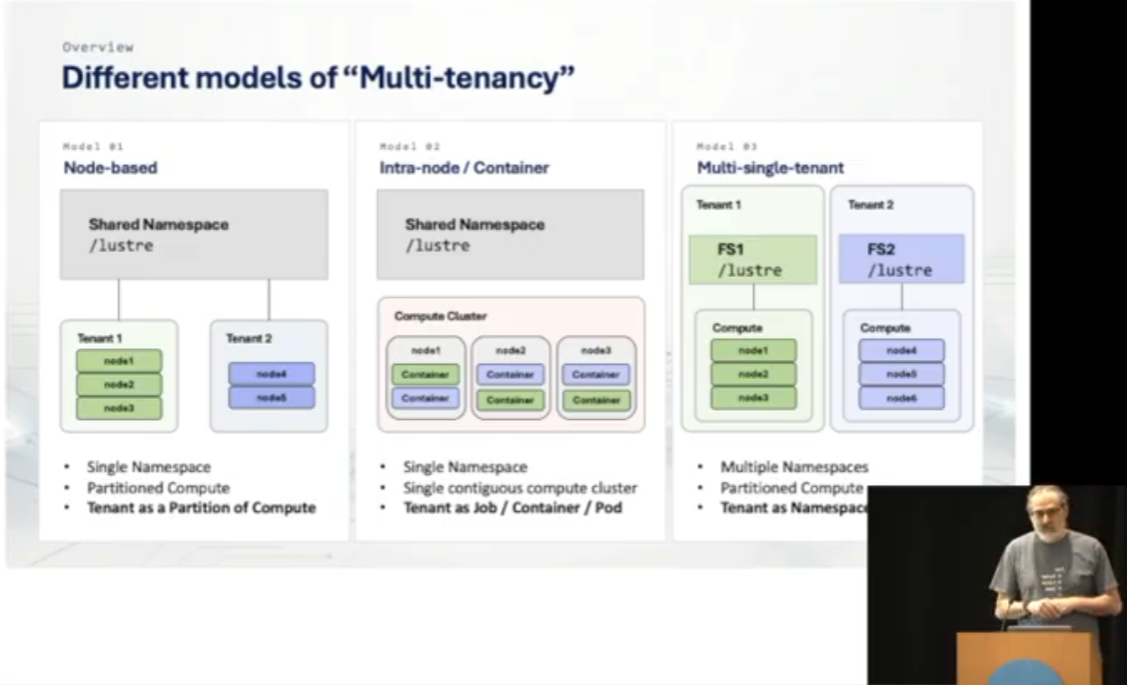
Practical Multi-Tenancy Robert Reed
Robert compared the models of multi-tenancy in use across HPC and cloud today, then showed what a fully isolated, self-managed tenant looks like on Lustre 2.17, from nodemaps and quotas to tenant networks added without downtime. Robert also looked at what comes next to further improve Lustre’s capabilities with features such as tenant-level quality of service.
Slides → Video →
Our thanks to OpenSFS and Indiana University for hosting. The full programme, with slides and recordings for every talk, is on the Lustre wiki and the OpenSFS site.